

What Does Professional Business Security System Installation Include? A Guide From a Business Security System Installer in Oklahoma City, OK
Professional business security installation in Oklahoma City, OK, covers far more than mounting a few cameras. Whether you run a retail shop on Western Avenue, a medical office near the OU Health campus, or a warehouse in the industrial corridor south of downtown, understanding the full scope of a commercial installation helps you plan smarter and protect your investment.
Why Commercial Security Installs Differ From Residential Ones
Commercial security systems are built for scale and compliance. A home system typically protects a few entry points and a small interior. A business system must cover multiple access zones, integrate with fire alarms, meet state and local code requirements, and support many users with different permission levels. Oklahoma businesses also face specific risks, including severe weather events that can trigger false alarms or damage equipment, making system resilience a real concern in the OKC metro. That is one reason why choosing the right business security system installer in Oklahoma City, OK, matters from the very start.
Commercial systems use higher-grade cameras, hardwired infrastructure, and enterprise-level control panels, and they require licensed, state-certified technicians to install and inspect them properly.
What a Professional Business Security Installation Actually Includes
Step 1 - Site Assessment and Security Audit
Every professional installation begins with a thorough walk-through of your property. The technician evaluates entry and exit points, blind spots, lighting conditions, wall and ceiling materials, and existing wiring. For OKC businesses, this often means accounting for large parking lots, loading docks, or multi-suite office layouts. This assessment shapes every decision that follows.
Step 2 - Equipment Selection and System Design
After the assessment, your installer recommends the right equipment mix for your property type and risk profile. A restaurant on Classen Boulevard has different needs than a distribution center near I-240. Equipment commonly selected includes high-definition IP cameras with night vision, motion-activated sensors for perimeter and interior zones, a commercial-grade control panel sized for the number of zones required, access control hardware such as keycard readers or keypads, and backup power supplies to keep systems running during Oklahoma's storm-related outages.
Step 3 - Cabling and Infrastructure Installation
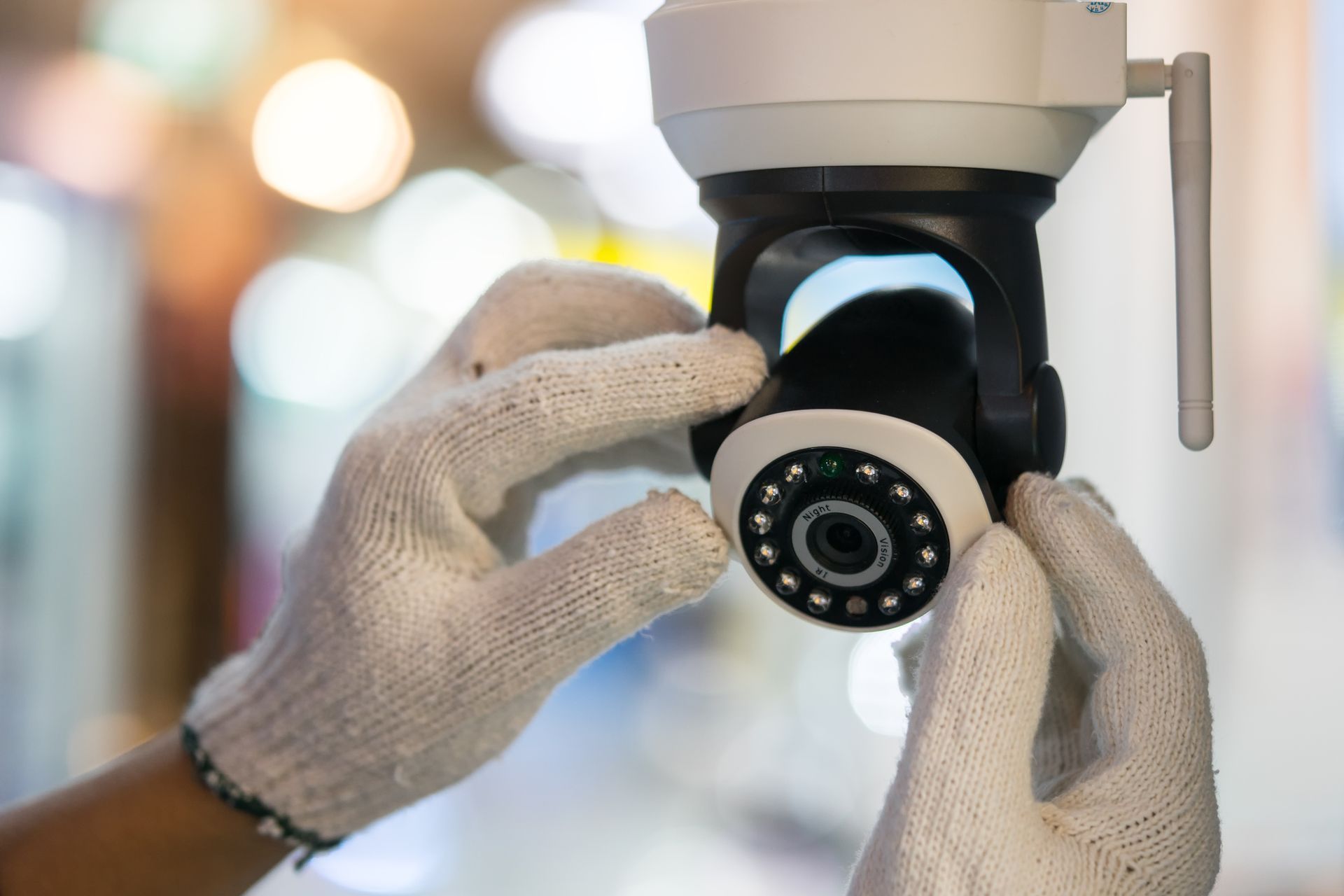
Proper cabling is the backbone of a reliable commercial system. Technicians run low-voltage wiring through walls, ceilings, and conduit to connect every camera, sensor, and reader back to the central panel. Wireless components can supplement the design where running cable is impractical, but most commercial-grade installations rely heavily on hardwired connections for stability and signal integrity.
Step 4 - System Configuration and Integration
Once the hardware is in place, the system is programmed. This includes setting up user access levels, configuring camera recording schedules, defining motion detection zones, and integrating subsystems. When a door sensor is triggered after hours, cameras in that zone can activate and send an alert, giving you or a monitoring center real-time visual context rather than just an alarm signal.
Step 5 - Testing, Training, and Handoff
A professional installer does not leave until the system is fully tested. Every sensor, camera feed, door reader, and alert pathway are verified. You and your key staff then receive a walk-through covering how to arm and disarm the system, pull up footage, manage user credentials, and reach support when needed.
Questions to Ask Your OKC Commercial Security Installer
A qualified business security system installer in Oklahoma City, OK, should answer all of the following clearly and without pressure:
▸ Is your company state-certified and licensed in Oklahoma?
▸ Do you handle permit applications if required for my facility type?
▸ How does your system handle power outages or severe weather?
▸ Can the system scale if I add locations or expand my building?
▸ What ongoing maintenance and monitoring options do you offer?
▸ Will you provide installation documentation for insurance or compliance purposes?
Types of OKC Commercial Properties Commonly Served
Retail centers in Midtown and along NW Expressway often prioritize CCTV coverage and loss prevention integrations. Healthcare and professional offices near the Medical Mile need strict access control to protect patient areas and sensitive records. Industrial and logistics properties in south OKC typically require perimeter cameras, gate access systems, and alarm monitoring with fast emergency response. An experienced business security system installer in Oklahoma City, OK, will tailor the design to your specific environment rather than offering a one-size-fits-all package.
How to Choose the Right Business Security System Installer in Oklahoma City, OK
Look for a company with verifiable Oklahoma licensing, a track record across multiple property types, and a willingness to walk you through the process before any work begins. Experience with local code requirements and OKC-specific risks, including severe weather resilience, sets a knowledgeable business security system installer in Oklahoma City, OK, apart from generalist contractors who treat commercial and residential jobs the same way.
Ready to Schedule Your Commercial Security Installation?
Hampton Fire & Security Protection LLC brings 25 years of Oklahoma-certified experience in fire protection and low-voltage security systems to every commercial project. Call
(405) 706-4759 or
request a free commercial security consultation to get started. You can also
contact the team online to discuss your property's needs and schedule a site assessment